
Physical brand assets add material, handling, scale, and the act of receiving or using an object. Those qualities can reinforce a brand promise when they serve a real customer moment. Digital touchpoints remain useful for access, updates, and action; the strongest system connects both.
An object changes how the brand is encountered
An invitation can be kept. A menu is held while a decision is made. Packaging protects a product and becomes part of opening it. These are different encounters from a screen, even when the logo and words are identical.
Cameron Russell on physical brand experiences, Creative Bloq, 30 September 2026 uses the Hogwarts letter as an example of a meaningful physical object. My practical takeaway is to design around what receiving the object does. That example does not prove a general return on investment for print, and it should not lead every business to send elaborate packages.
Choose the moment before choosing the material
Start with an event in the customer journey: first purchase, membership, a consultation, delivery, or a return visit. Decide what the person needs to know or do at that moment. Then ask whether an object improves that experience enough to justify its cost and handling.
For a fictional small hotel, a compact arrival card with the room number, breakfast time, and local contact can be useful immediately. Heavy decorative stationery with no practical information might feel expensive while doing less for the guest. Substance can come from relevance rather than an elaborate finish.
Design the material as part of the identity
Typography, contrast, paper behavior, folding, and printing methods all affect how the identity works. A fine rule that looks crisp on screen can disappear on textured stock. A color that looks bright in a digital palette may need adjustment for the chosen print process.
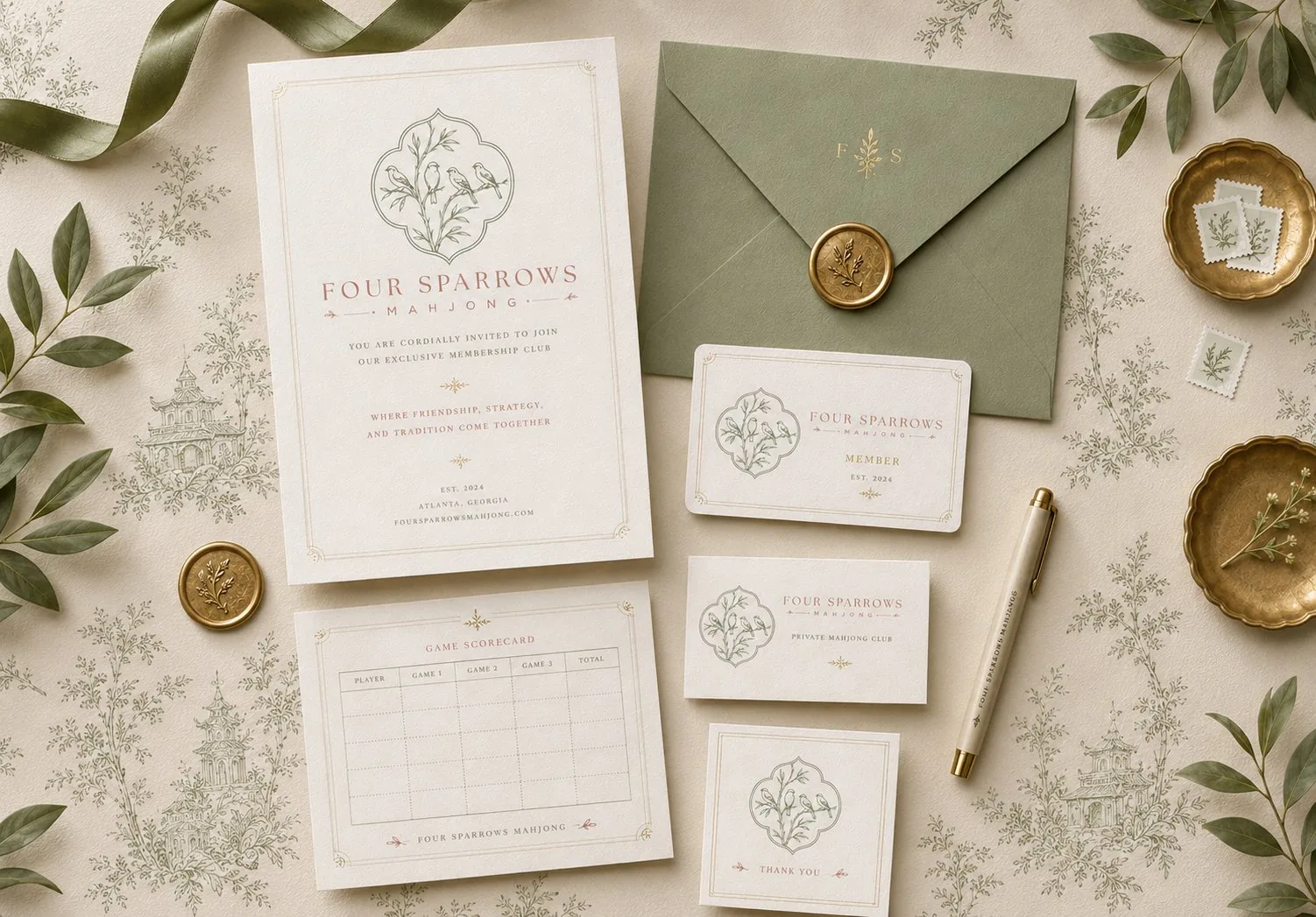
My Four Sparrows Mahjong case study presents stationery and club materials alongside the identity. It gives a concrete design reference for extending a mark into invitations, membership pieces, and a table setting. Those portfolio images illustrate applications; they do not establish customer retention or sales effects.
Connect physical and digital with one clear action
A printed guide can direct people to the latest instructions. An invitation can lead to an accessible booking page. A product insert can point to care information. Use a readable URL alongside a QR code, and make the destination useful on a phone.
Keep essential information on the object where it is needed. Requiring a scan just to learn what an item is creates unnecessary friction. Check that the name, contact details, and key instruction remain legible when the piece is seen outside the original setting.
Prototype the whole service sequence
- Print at actual size and handle it in normal lighting.
- Test opening, folding, storing, and writing on it.
- Check the design with the real contents, not an empty mockup.
- Confirm print specifications and replacement costs with suppliers.
- Ask staff how the item is distributed and replenished.
A beautiful invitation can fail if an address will not fit. A premium box can become waste if it is difficult to reuse or recycle. Choose finishes and quantities against actual requirements, and describe environmental claims only when the supplier's evidence supports them.
Measure a result the object can plausibly affect
Set a goal such as completed bookings, fewer support questions, or correct use of a product. Compare a small batch with the previous approach where practical. A QR scan is an interaction, not proof of a sale; pair it with the action you actually care about.
My packaging, editorial, and collateral services treat physical assets as working parts of the brand. Begin with one useful object, connect it to the digital journey, and expand when the evidence and operational capacity support it.
Frequently Asked Questions
Are physical assets better than digital branding?
They serve different purposes. Physical assets add handling and material presence; digital assets provide broad access and easier updates. Choose the combination that supports the customer journey.
Which physical asset should a small business create first?
Start with the object that solves an immediate customer need, such as a useful menu, arrival card, product label, or invitation. Prototype it before committing to a larger print run.
Sources and Credits
Sources checked on 5 October 2026. Reported examples are attributed above; decision frameworks and hypothetical scenarios are design recommendations. Portfolio examples are my own work unless explicitly described otherwise.
Planning printed materials or packaging? We can identify the customer moment, choose the right applications, and build a consistent identity across print and digital. Book a free consultation or explore design services.