
Standardize the brand decisions that customers encounter most often and that teams are most likely to get wrong. Begin with approved identity files, naming, core type and color roles, and high-use templates. Rank further rules by customer impact, frequency, and error risk, then assign an owner who keeps them current.
A growing team needs decisions it can reuse
Early on, the founder or designer can approve every slide, label, and social post. Growth changes that. More people need to make choices, often under time pressure, and a brand system becomes useful when it removes recurring uncertainty.
The wider application range in BP&O: Two Tribes Brewing identity by All Purpose, 8 October 2026 offers a practical prompt: the logo, packaging, and venue can belong to the same business while doing different jobs. My interpretation is that standardization should preserve the relationships that matter, without forcing every touchpoint into an identical layout.
Inventory the work before writing the rules
Collect the assets teams actually create each week: sales decks, proposals, invoices, website sections, product screens, labels, and onboarding messages. Record who makes each item, where the source file lives, and what usually needs correction.
Include the customer consequence. An outdated descriptor may confuse an offer; a misplaced logo may weaken recognition; an inconsistent chart color may affect readability. A seldom-used decorative pattern should not take priority simply because it is more interesting to design.
Rank problems with a simple decision sheet
- Exposure: how often does the audience encounter this asset?
- Consequence: what goes wrong when it is inconsistent?
- Repetition: how many people remake the same decision?
- Effort: can one rule or template prevent the recurring error?
- Owner: who can maintain the approved version?
This is a prioritization aid, not a statistical formula. For a fictional consultancy, the proposal template may rank ahead of social artwork because it supports every new contract and has several authors. For a retailer, labels and ecommerce product naming may come first.
Create the minimum reliable foundation
Provide current logo files, clear versions for backgrounds and sizes, approved business and product names, and defined typography and color roles. Add practical examples of common mistakes. State where users should obtain the files rather than expecting everyone to save a private copy.
The brand assets page illustrates a shared source for approved material. A growing business also needs someone responsible for updating that source and retiring outdated versions. Access without ownership can simply distribute the same mistake faster.
Standardize templates where the work repeats
Build the most-used document or campaign format first and test it with the people who create it. Use realistic long names, large data sets, and awkward image proportions. A template that only works with the sample text leaves the next author to improvise again.
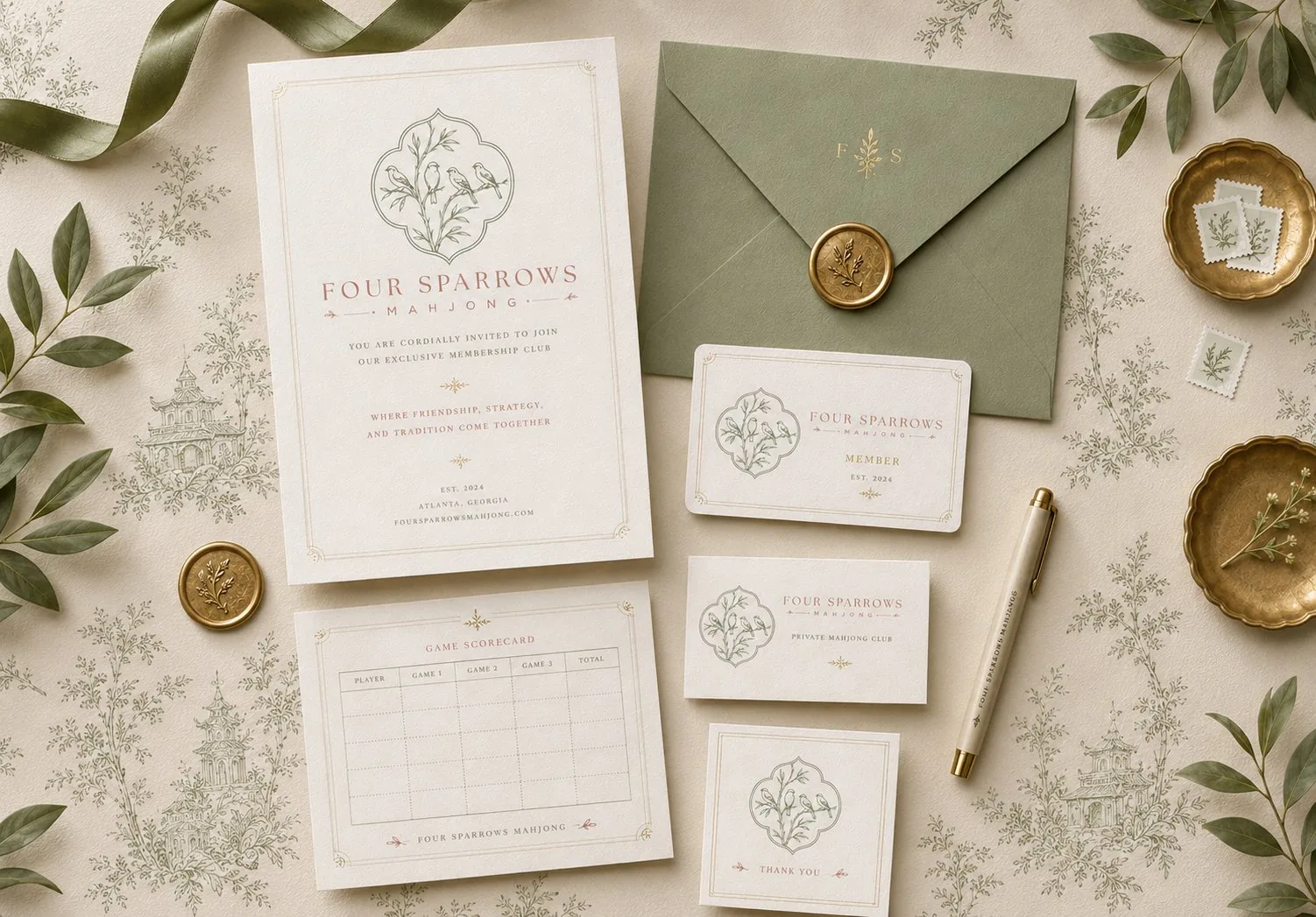
My Four Sparrows portfolio shows identity in recurring club materials. The useful comparison is the continuity between applications, not a documented internal rollout result. Ask whether each team can create the next application without reinventing the design rules.
Leave controlled room for variation
Define what is fixed, what can vary, and what needs review. A sales slide and a product interface do not need the same density or composition. They do need an understandable relationship to the brand. Include examples of acceptable variation so teams can make decisions within the system.
Apply the same principle to AI-assisted production: approved assets and clear constraints should travel with the task, and a named person should review final outputs. The guidelines for non-designers article covers what to include; this prioritization method determines the order in which to build it.
Review the first month of use
Collect the corrections and questions that still recur. Improve the rule or template behind them, then add the next high-impact standard. Measure whether the team can find the right asset and complete its work with fewer unresolved decisions, rather than measuring the page count of the guidelines.
Frequently Asked Questions
Should a growing business standardize everything at once?
Start with high-use decisions that affect recognition, clarity, and repeated work. Expand the standards after the team has used and tested the foundation.
Who should own brand guidelines?
Assign a person or team that can maintain approved files, answer usage questions, and coordinate changes with the people who create customer-facing materials.
Sources and Credits
Sources checked and article updated on 13 October 2026. Reported examples are attributed above; frameworks and fictional scenarios are design recommendations. Portfolio examples are my own work and do not imply measured client outcomes.
Is your team repeatedly rebuilding the same branded materials? We can identify the first standards and templates that will make the work clearer. Book a free consultation or explore design services.