
An AI product can feel human through clear language, recognizable visual choices, thoughtful pacing, and interfaces that respect the user. Handmade-looking assets are optional. Describe production accurately and connect the personality to what the product actually does, rather than using texture or handwriting as proof of human authorship.
Warmth is a design quality; authorship is a factual claim
A loose illustration can make software feel approachable. It cannot tell the audience who drew it or which tools were used. Treat the feeling and the production claim as separate decisions. A company can use AI in its product while commissioning human design work, and explain both without contradiction.
BP&O: Granola identity by Ragged Edge, 25 September 2026 reviews Ragged Edge's identity for the AI notepad, including a bespoke script developed from a co-founder's handwriting and calmer interface applications. It is a concrete example of craft connected to a product story. It does not make a handwriting font a universal signal of trust.
Start with the human situation the product serves
Write down the user's situation before describing the visual mood. Are they trying to follow a meeting, review a document, or make a decision under pressure? Choose a tone that fits that situation. Friendly software can still need precise language and restrained visual behavior.
For a fictional AI scheduling tool, the important moment may be correcting a proposed time. A reassuring brand would make that correction easy and explain what happens next. A playful mascot cannot compensate for a confusing confirmation or an exaggerated promise about automatic accuracy.
Choose one specific source of personality
Use a deliberate type relationship, original illustration grammar, recognizable composition, or a tone grounded in the user's work. Explain why it belongs to this product. If the same visual direction could sell an unrelated banking app, note-taking service, and wellness drink, it needs more specificity.
Keep the distinguishing choices in a repeatable system. Define how illustrations are drawn, which typography carries the voice, and where expressive elements should stop. This goes beyond the generic AI-logo checklist: the question here is how personality remains honest across the whole experience.
Keep expressive branding out of critical reading tasks
A campaign can carry more texture and motion than a document editor. Preserve calm surfaces, readable type, clear states, and predictable controls where people work. Use the brand's personality to make the experience coherent rather than adding decoration to every panel.
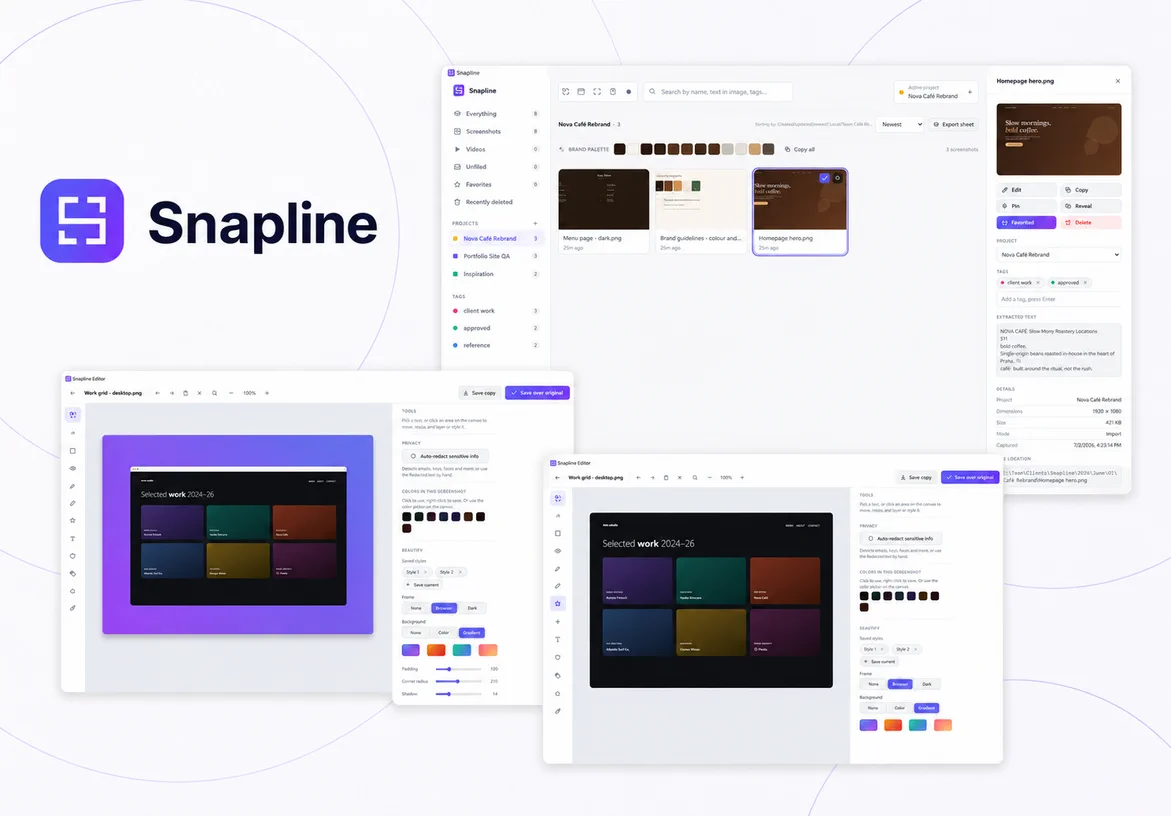
My Snapline project connects an identity to software screens. It is my own Windows product, not an AI notepad, and serves here as an application reference. Seeing the actual interface helps assess whether the identity supports use beyond a marketing image.
Document what was commissioned, generated, and edited
- Record the creators and tools involved in final assets.
- Keep approvals and usage terms alongside deliverables.
- Describe commissioned craft precisely when it is part of the story.
- Review claims that imply all content or outputs are human-made.
- Explain relevant product limits in ordinary customer language.
The earlier human-made proof guide concerns evidence of production. This identity decision comes before that evidence: what should the visual language communicate, and can the business support the impression it creates?
Review personality and product behavior together
Put the landing page, onboarding, an imperfect output, and a correction flow in one review. Ask whether the brand still feels credible when the product needs human intervention. The most useful personality helps users understand their role instead of making the tool appear infallible.
AI can assist exploration, but the approved system still needs human judgment about fit, consistency, and claims. The AI Branding Lab is a place to explore assisted workflows; the final brief should specify the responsibilities and deliverables that make those workflows usable.
Frequently Asked Questions
Does an AI brand need hand-drawn illustrations?
No. Human character can come from typography, language, composition, and considerate product behavior. Use illustration only when it fits the brand and can be applied consistently.
Does a handmade-looking style prove human authorship?
No. Visual style is not production evidence. Support authorship claims with accurate credits and records of how the work was created.
Sources and Credits
Sources checked and article updated on 13 October 2026. Reported examples are attributed above; frameworks and fictional scenarios are design recommendations. Portfolio examples are my own work and do not imply measured client outcomes.
Building an AI product identity? We can define a visual personality that fits your users, works inside the product, and supports accurate communication. Book a free consultation or explore design services.