
Make a common symbol distinctive by connecting it to a specific brand truth and expressing that truth through an original silhouette, proportions, negative space, and typography. Test it beside competitors and in real applications. Visual distinctiveness does not establish legal ownership.
Start with a better reason for the symbol
A mountain can suggest ambition, endurance, a place, or an outdoor product. A leaf can suggest growth, a particular ingredient, or environmental care. Those associations are available to many businesses. The symbol needs a more precise reason to belong to yours.
Tom May on mountain symbols, Creative Bloq, 3 October 2026 brings together recent mountain-based identities with visibly different treatments. The useful lesson is not that a particular motif guarantees success. A familiar subject can support distinct identities when the reference and construction are specific.
Write the detail that only this business can defend
Replace an abstract brief such as growth and trust with a concrete observation: a locally recognizable ridge, the shape of a tool, a founder's initials, a particular production method, or an action the customer performs. Check that the detail is true and meaningful to the business.
For a fictional climbing equipment repair shop, a generic peak says outdoors. A peak constructed from the angle of a repaired carabiner might connect to the service more directly. That is a concept to explore, not a reason to pack two objects into every mark.
Change the construction, not just the color
Explore silhouette, rhythm, geometry, and the relationship between filled and empty space. A distinctive outer shape often survives faster viewing than an intricate hidden detail. Pair the mark with typography that supports its character rather than leaving the wordmark as an afterthought.
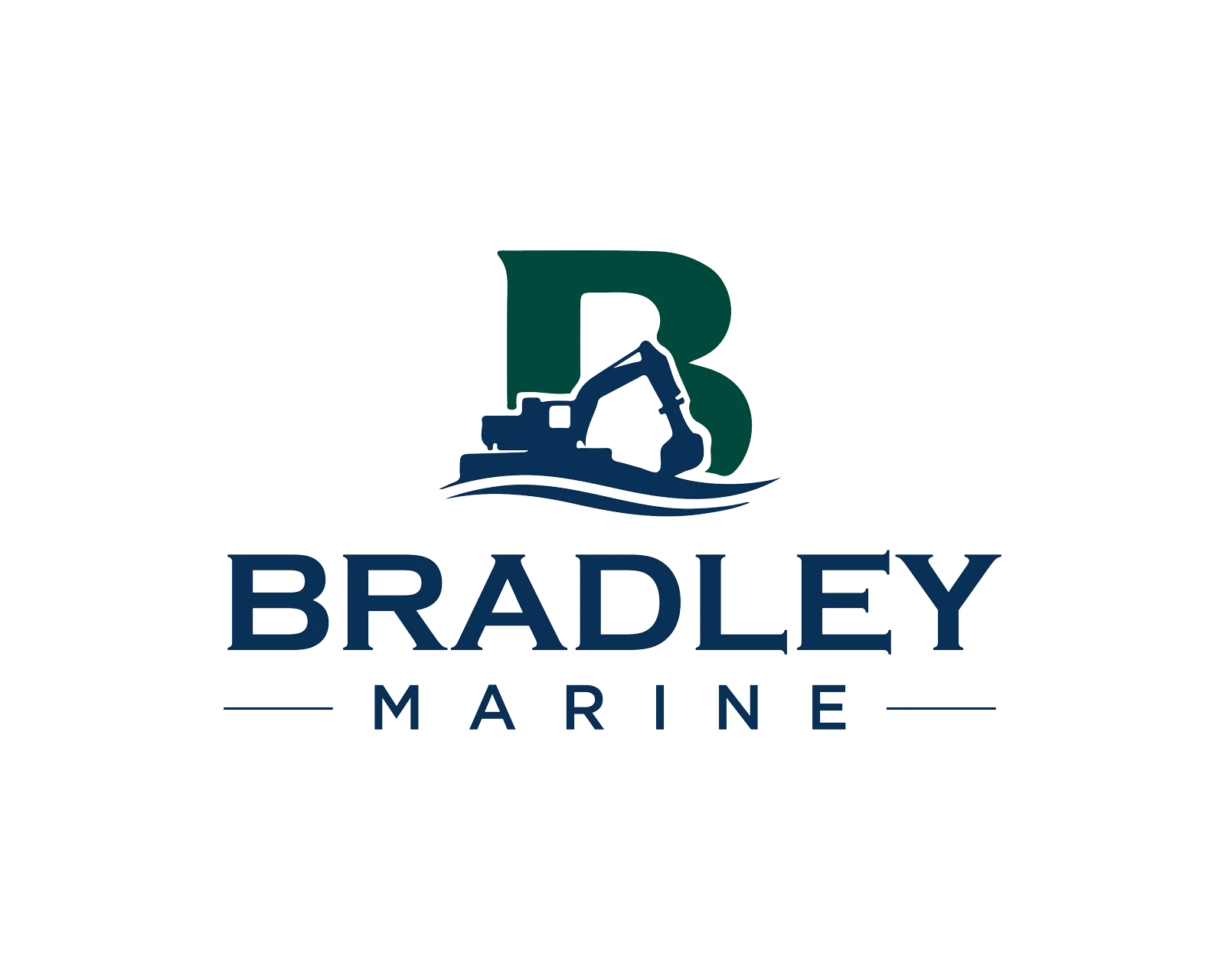
My Bradley Marine Construction identity combines a B, an excavator silhouette, and a wave line. Those ingredients connect the mark to the company's work. The case study lets you examine the actual drawing and field applications rather than relying on a verbal claim of uniqueness.
Use a comparison sheet before polishing
- Place the candidate beside direct competitors in one color.
- Compare its silhouette before reading the names.
- Check the mark at actual favicon, label, and clothing sizes.
- Look for the same composition in adjacent categories.
- Ask whether removing the name leaves any recognizable distinction.
If color is doing all the work, the identity may weaken in black-and-white reproduction. If a clever internal detail disappears at small size, consider a simpler primary shape. If the mark looks novel only because the presentation is unusual, return to the drawing.
Give AI a research role with human review
AI can help list associations or generate rough directions, but a polished output does not demonstrate originality or clearance. Review its visual references, redraw the chosen structure deliberately, and inspect source files. Avoid accepting a generated motif simply because it feels professionally rendered.
My guide to generic AI company logos covers technology category cues. This article focuses on developing a specific drawing after a useful motif has been chosen. The AI Branding Lab explores where generation can support that process.
Be precise about what ownership means
In this title, own means build a visual association people can recognize. Trademark rights are a separate question. The USPTO guidance on strong trademarks explains differences in trademark strength; a designer's visual audit is not a substitute for a professional search and legal assessment.
Deliver an original vector drawing, clear usage rules, and the project records needed for the agreed handoff. Before launch, commission the appropriate clearance for the intended markets. A specific symbol should be easier to explain, reproduce, and recognize, not merely harder to describe.
Frequently Asked Questions
Can a common symbol make a good logo?
Yes. A familiar subject can become distinctive through an appropriate reference, original construction, typography, and consistent use. The subject alone is not the differentiator.
Does a custom drawing guarantee trademark protection?
No. Visual originality, trademark distinctiveness, and legal availability are different questions. Obtain professional clearance for the intended use and markets.
Sources and Credits
Sources checked on 5 October 2026. Reported examples are attributed above; decision frameworks and hypothetical scenarios are design recommendations. Portfolio examples are my own work unless explicitly described otherwise.
Have a familiar symbol in mind? I can help turn the business reference into a custom logo and a practical visual identity system. Book a free consultation or explore design services.